Lens, Light, & Time
A practical guide to what your settings actually do to an image—not just how to set them, but what they create.
The Triangle
Aperture, shutter speed, and ISO form the exposure triangle. Change one, and you must compensate with another to maintain the same brightness. But each change also changes the character of the image:
Open the aperture → more light, shallower depth of field
Slow the shutter → more light, more motion blur
Raise the ISO → more sensitivity, more noise
Every exposure is a set of trade-offs. The technical question is "how do I get enough light?" The creative question is "what do I want this image to feel like?"
Answer the creative question first. Then solve the technical one.
Focal Length (The Lens)
Focal length controls how your subject relates to its environment. It's not just about "zoom"—it changes the geometry of your image.
Wide (14–24mm)
Puts the subject in a place. At distance, you capture context—the whole room, the whole street, the whole stage. Up close, the subject dominates and looms, while the background stretches away.
Barrel distortion bends straight lines at the edges. Sometimes that's a problem; sometimes it makes walls enclose and spaces feel intimate. You can correct it in post, or use it.
I love 20mm for two reasons: I can put a subject in a place that shows surrounding activity or desolation, and I can get close to a subject to lean into the distortion and scale that happens when you're very near with a wide lens. The distortion becomes part of the story—the room curves around the performer, the street wraps toward you.
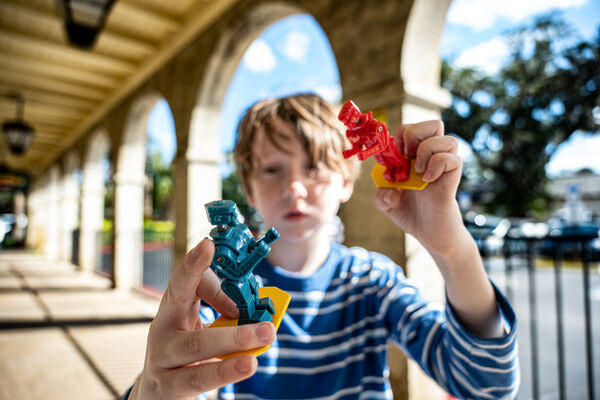
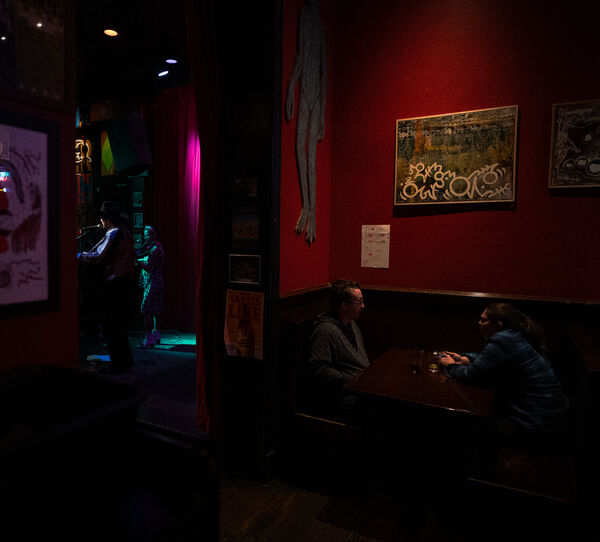
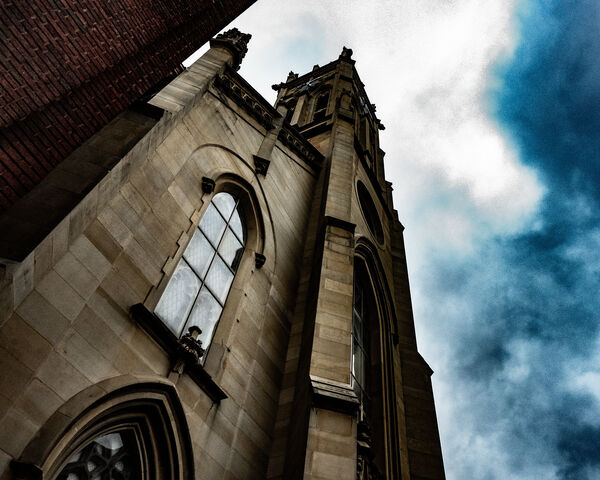
In "His Toys," I'm turning the boy into the landscape, because he is the ruler of his imaginary domain. The toys are the subject, because that's his subject. We are seeing not what he sees, but what he feels.
Barrel distortion is correctable in post if unwanted. Wider than 20mm starts introducing significant edge distortion on full frame.
Normal (35–50mm)
The least opinionated focal length. Neither compressing nor stretching, it renders space with neutral perspective—nothing feels artificially stretched or stacked.
50mm is often called "closest to the human eye," but this is misleading. What 50mm matches is the magnification of human vision—subject size through the viewfinder roughly matches what your naked eye sees. But vision isn't a tunnel. Your eye takes in peripheral space, flicks between elements, while your brain composites the scene. A wide angle can feel more "true to being there" even though the spatial rendering is different. All focal lengths show real space; they just emphasize different relationships within it.
50mm forces you to move—you can't zoom your way out of a bad position. That constraint builds discipline.
I like to live in the outliers of Wide and Short Telephoto, but the Normal range is fantastic for picking out band members in live music, or bringing a tighter framing to a street photo where the surrounding context has focused interest. I think about what lens will frame what I want so I can minimize resolution loss from cropping too much.
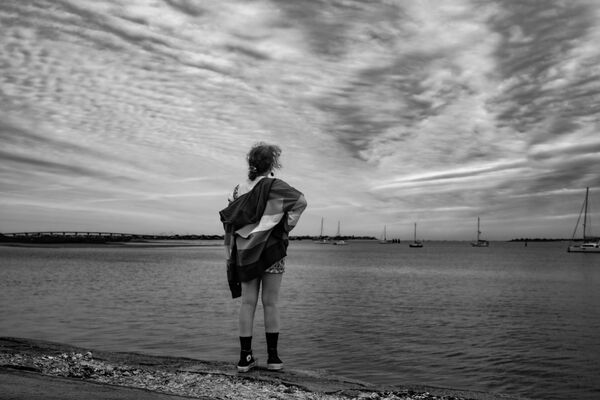
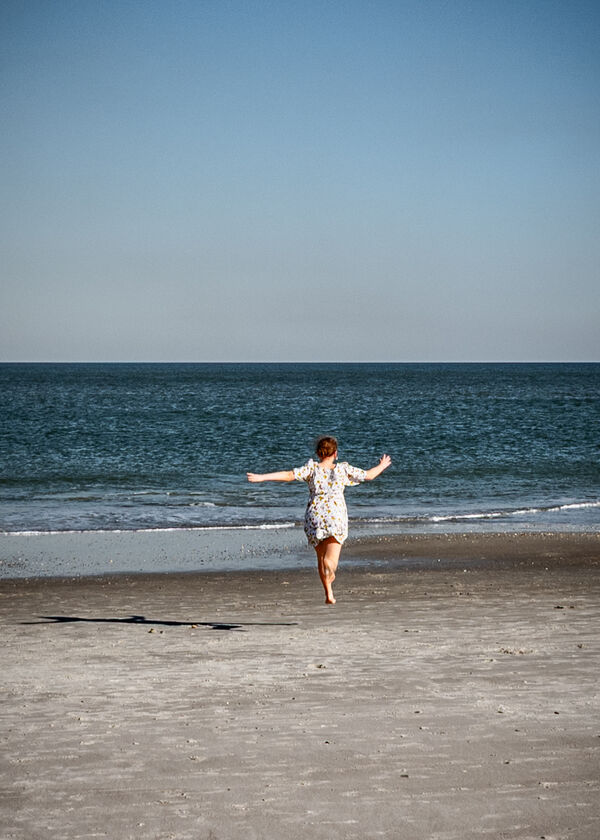
"There She Stood, Watching the Ships" gives us a wide landscape of ocean and boats, but the girl is definitely the subject. There's no compression or distortion to speak of here, just the placement of her and what she's looking at.
35mm is slightly wider and more environmental; 50mm is slightly tighter and more subject-focused. Both are "normal" territory.
Short Telephoto (85–135mm)
The portrait range. Compression begins: backgrounds flatten, faces render without distortion, subjects separate from their environment. You're isolating someone from the world behind them.
At 85mm, you're still in the room with your subject. There's intimacy. You can have a conversation at this distance.
My focus in photographing people is to make their place and time just as important as their immediate appearance. 85mm can do this really well, really often. It also lets me keep a certain distance that lets subjects remain authentic—less "here's a camera in front of you" than a Normal range might present. The distance becomes permission for them to be themselves.
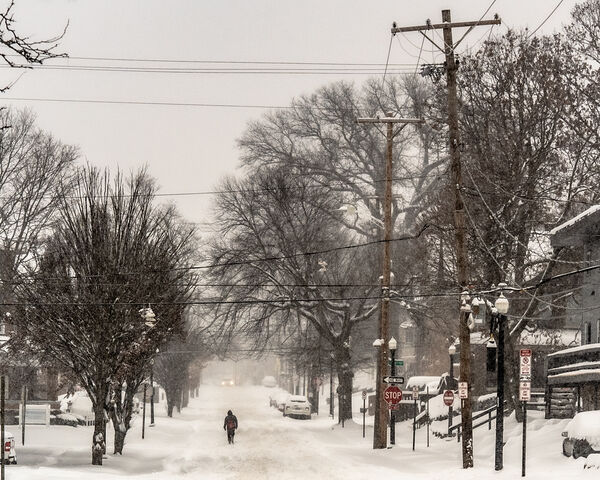
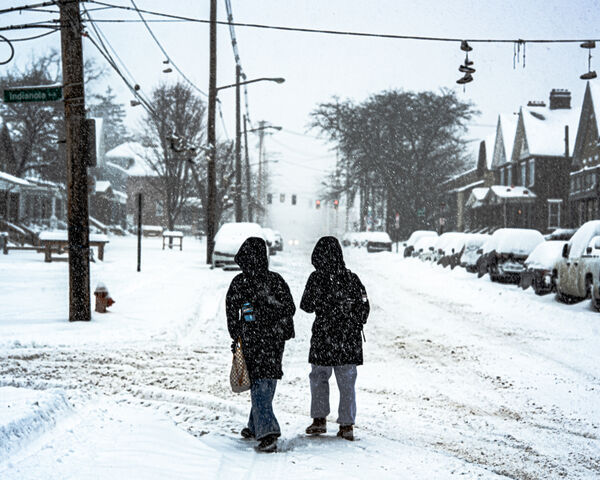
You don't need a telephoto lens to get telephoto compression. Step back. At 85mm from a distance, you get the flattened planes and stacked layers of a telephoto perspective while keeping the advantages of a fast, stabilized short lens. In "Trek," the figure is small against compressed layers of street, trees, and infrastructure—all shot at 85mm by simply being far away. The lens gives you reach and light; your feet give you compression.
85mm on full frame is roughly equivalent to 56mm on APS-C or 42mm on Micro Four Thirds for similar framing and compression.
Telephoto (200mm+)
Severe compression. Backgrounds collapse into flat planes. Distant objects appear stacked on top of each other. You're no longer in the scene—you're observing from outside it.
The subject becomes a silhouette against a simplified world. Useful for graphic compositions where shape matters more than environment.
I don't shoot here. My work is about presence and proximity—being in the room, in the crowd, close enough to feel the moment. Telephoto is observation from outside, which serves different purposes well. If your work is wildlife, sports, or compressed graphic landscapes, this is essential territory. It's just not mine.
Good for: wildlife, sports, graphic/abstract compositions, compressed perspectives.
Aperture (The Light Gate)
Aperture controls depth of field—how much of your image is in focus. But it also controls attention: what the viewer looks at first, and what they're allowed to ignore.
Wide Open (f/1.4–f/2.8)
Shallow depth of field. Your subject is sharp; everything else dissolves into blur. The viewer has no choice but to look where you pointed.
This is separation. The performer exists; the crowd behind them becomes texture. The face is present; the background is suggestion. You're making a decision about what matters.
Be careful with multi-subject work. A band shot at f/1.8 might put the singer in focus and the guitarist in soup—now you've accidentally said the guitarist doesn't matter. When multiple people are the subject, you may need to stop down or position them on the same focal plane.
I shoot shallow a lot, because I love the opportunities to draw the subject out of the environment. But don't think "I should go shallow only when I don't care about the environment"—even at f/1.4 you can still get details, depending on your angle, distance, and lighting. I also challenge myself to experiment in the f/2.8 range, where the blend of shallow depth with more hints at the background creates some great compositions.
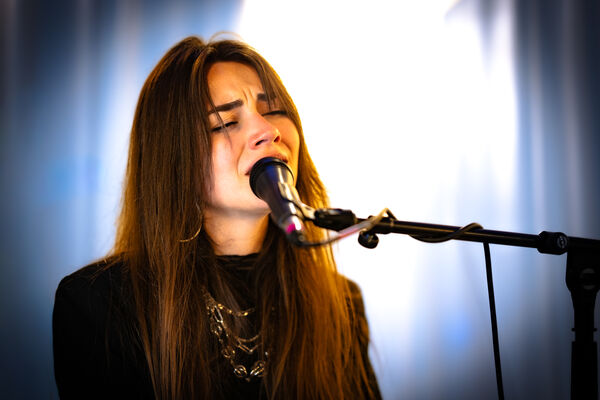
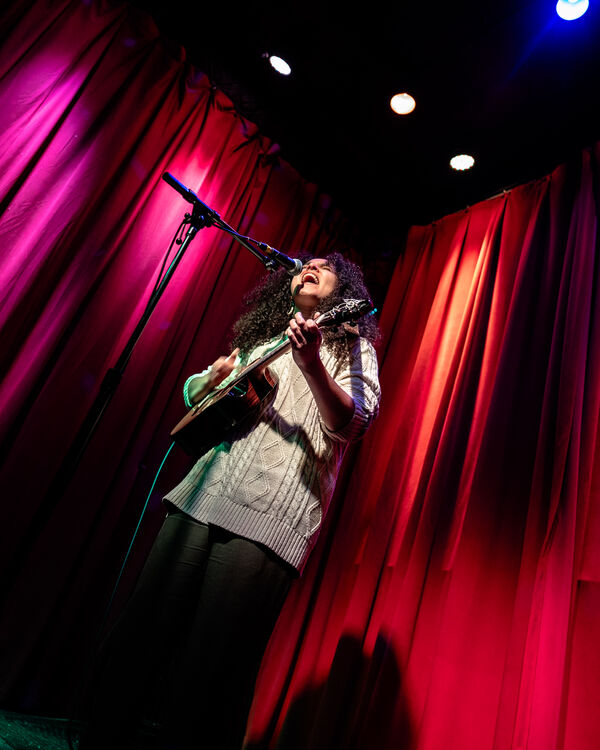
"Her Heart in It" doesn't read as a shallow DoF at first. Because of the lighting and interest the background holds, you definitely see it. But because this was shot at f/1.8, she is separated from the background while also being in the context of it. Sometimes the goal of shallow DoF isn't to ignore the environment, it's to showcase it without fighting the need to focus on the subject.
Also lets in more light—critical for low-light venues. The wider your aperture, the faster your shutter can be.
Middle Range (f/4–f/8)
Balanced depth. Your subject is sharp, and the environment is readable but not competing. Good when context matters but shouldn't overwhelm.
This is often the sharpest range for most lenses—the optical sweet spot where aberrations are controlled but diffraction hasn't started softening the image.
This is an ideal range for street work by default, because it gives you context on the environment—viscerally separating from portrait work—while still lending the subject some focus prominence. It's also a nice range for full band shots, though you may need to surf between this and Stopped Down to find what really captures the whole group.
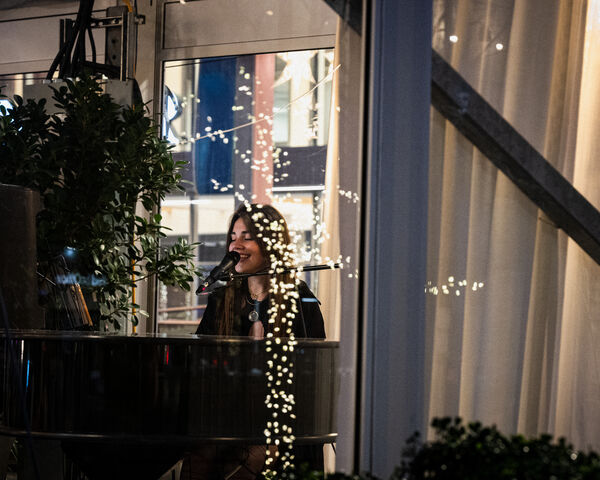
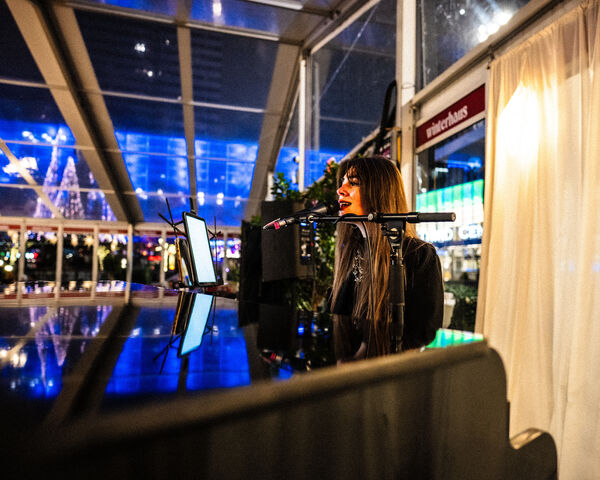
"I'll Stay and Watch" needs that environment to make the photograph. The reflection of the Christmas lights and the reality that we are outside, she is inside are all part of the moment and time that would have been lost if I felt I had to focus on her alone, or would have been too competitive if I stopped down too far.
f/5.6–f/8 is often the sharpest range for most lenses—the optical sweet spot.
Stopped Down (f/11–f/16)
Deep depth of field. Everything is in focus, near to far. The image becomes democratic—no single element dominates through sharpness alone.
This is the landscape aperture. When the trees in front and the mountains behind are equally the subject, you need them equally sharp. It also creates silhouettes and shapes: when nothing blurs, forms become graphic.
Don't shy from deep depth of field for single subjects. It works beautifully when you have other ways to direct attention—tone, color, position, light. A figure silhouetted against a sunset doesn't need blur to command the frame. The context becomes part of the story rather than competing with it.
It's hard to do in my evening street work or live music photos, because it requires so much light. But I seek out opportunities, because tonal or positional separation with no DoF help really clicks sometimes. I look for where I can capture extra light—spill on a reflective surface, or an off-angle behind the musicians that turns stage light into backlight. Backlighting also gives you additional separation that doesn't need help from depth of field.
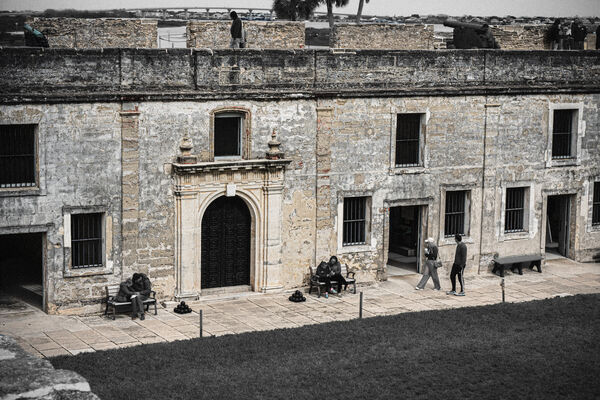
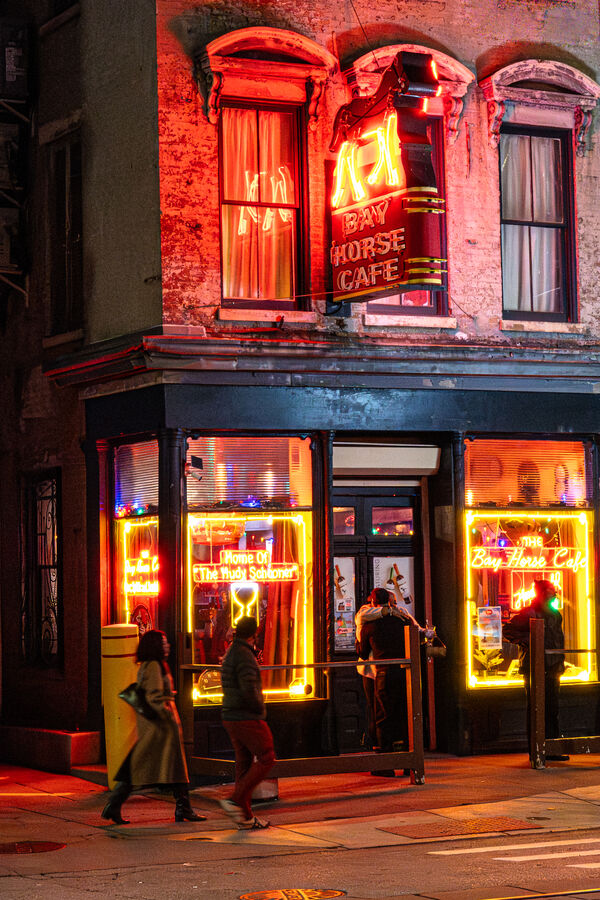
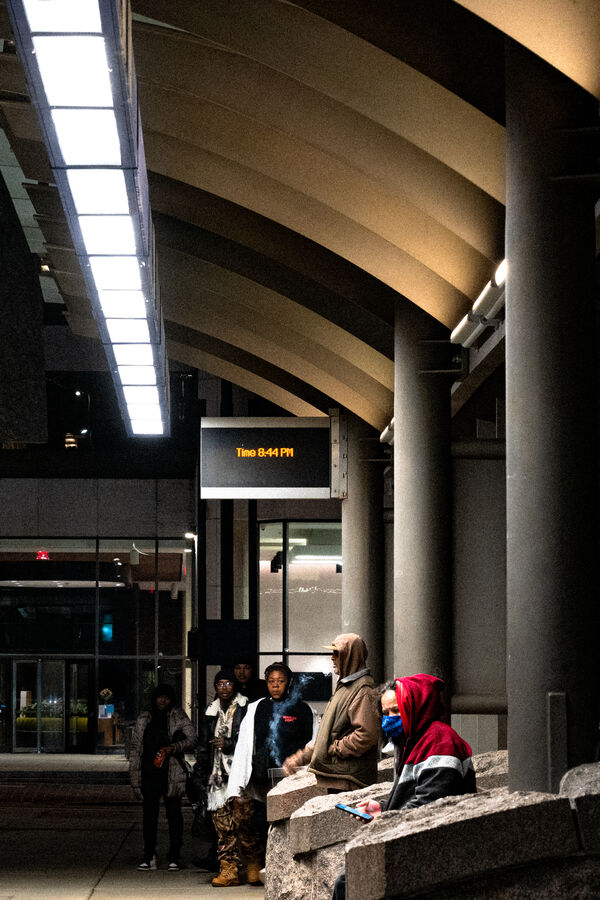
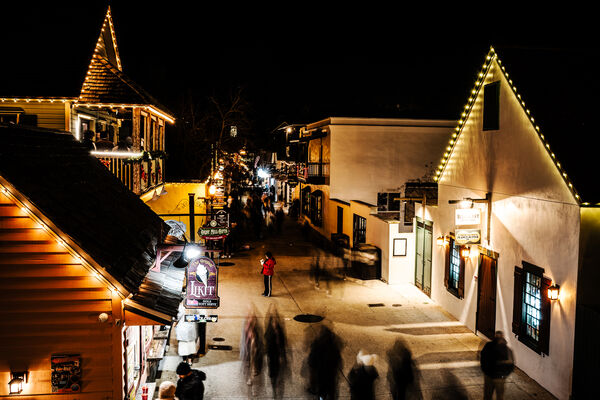
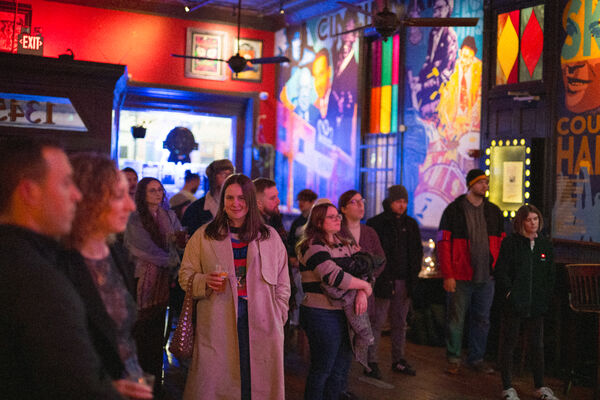
For "Time: 8:44 PM," I really wanted to show all the people and use the falloff of the lighting to decide how your eye will travel. I also needed to show the sign with the time on it unambiguously. There's so much strength in the color and position of the woman in the foreground: her coat, the fact she's looking right at me, the evident scowl in her eyes, that she demands attention, even if you don't focus on her first. The fact that the eye probably catches first to the time on the sign and then travels around is a strength: I've made you dwell on the image.
Requires more light or longer exposures. Diffraction starts softening the image past f/16 on most sensors.
Shutter Speed (The Moment)
Shutter speed controls time—how much of it you're capturing. Fast shutter freezes; slow shutter accumulates. Both are true to what happened; they're just different truths.
Fast (1/500s and faster)
Frozen motion. A drummer's stick hangs in the air. A dancer's leap suspends. You're extracting a single instant from continuous movement.
This is the "decisive moment" territory—the peak of action, caught. It shows what the eye can't see because the eye doesn't freeze time.
Don't think about this as "only for stuff moving really fast"—sometimes you can use it to cheat Aperture or ISO to levels you want by denying light. This can help reduce noise or let you get a shallow depth of field where the light might otherwise overwhelm those choices.
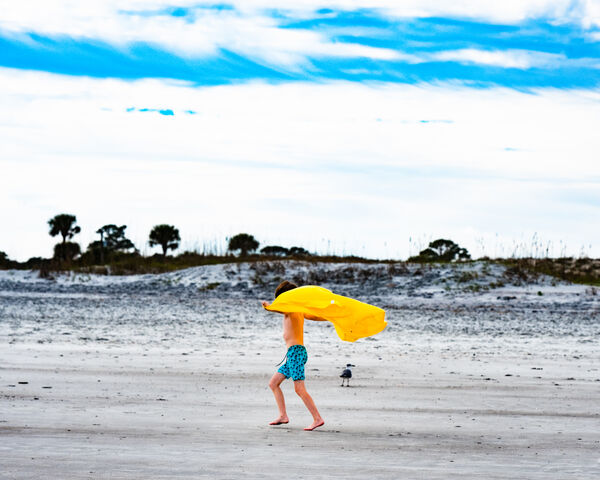
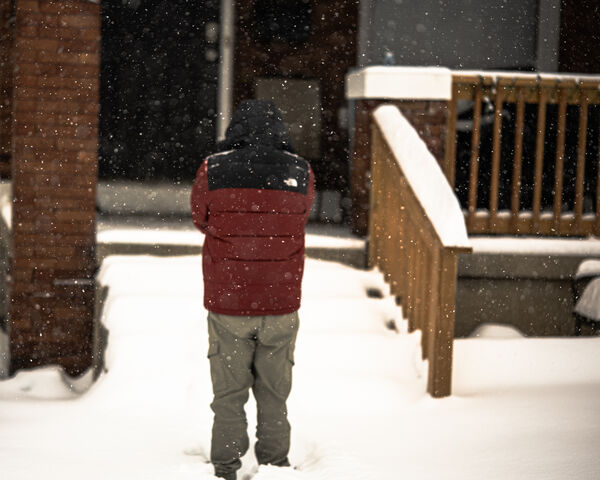
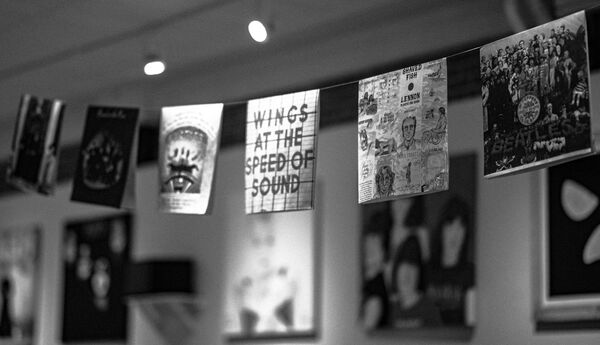
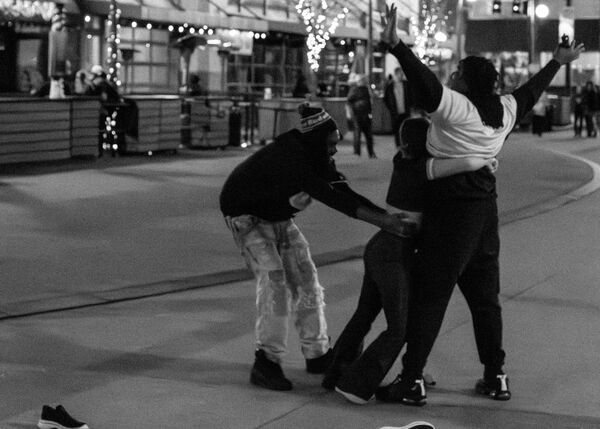
There's a lot of light in "A Study in Spoonful I," but I didn't want it to look like it. I knew when capturing I wanted a very shallow field to cause falloff on the string of album sleeves, and I already was at ISO 1600 just to prevent overexposure. I didn't want to risk excess noise in the photo, so I put the shutter at 1/800s. Nothing is moving here. I didn't need stillness, I needed less light. And this also helped my intention: the exposure in the shadowed areas are markedly less because the sensor had less time to see them.
Requires abundant light or high ISO. Electronic shutter can go faster than mechanical if your camera supports it.
Moderate (1/60s–1/250s)
Traditional handhold territory. Most movement is stopped, but fast motion may blur slightly. This is the range where you can work without a tripod and still get sharp images of relatively still subjects.
Slight motion blur on hands or instruments can convey energy without losing the subject entirely. It's controlled looseness.
This is where most of my work lives. I want to show variance in motion, get a good amount of light to the sensor, and give myself headroom on Aperture and ISO.
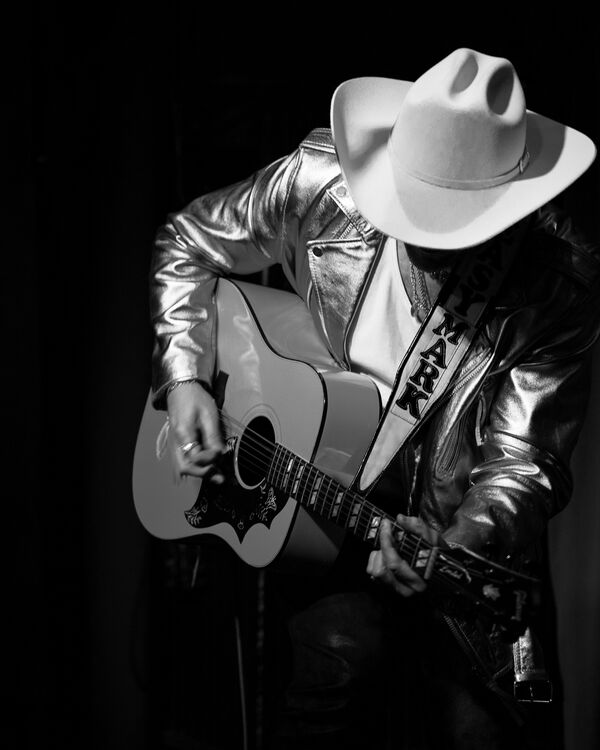
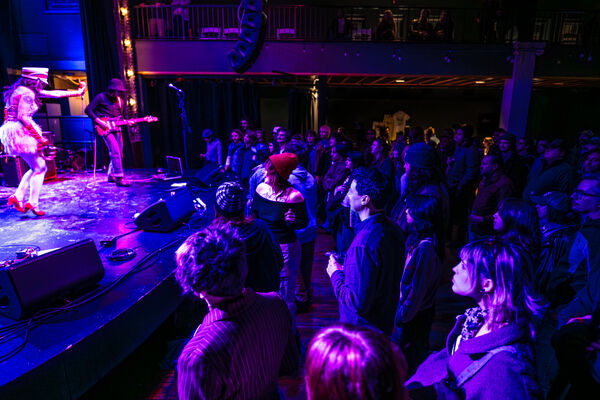
"She Dances at Their Rock Show" gives you the indications of motion: there's a blur on the tambourine and the singer's legs, and a suggestion of motion on the true subject: the woman dancing in the audience. But we don't lose definition from her, even though she's mid dance. This gives us a feeling of kinetic energy on the stage and a stillness in the crowd, and her being in that liminal state of moving but not blurred helps her stand out.
The classic rule says don't handhold slower than 1/(your focal length) to avoid camera shake. But modern in-body stabilization (IBIS) rewrites this dramatically—you can push to 1/15s or even slower with good technique and stabilization. I regularly shoot 1/13s at ISO 400 in venues when I see the shot coming. Know your gear's limits by testing, not by rules.
Slow (1/15s–1/2s)
Intentional blur. Movement becomes streaks and ghosts. A guitarist's hand blurs through a chord. A crowd becomes a smear of motion while the still singer stays sharp.
This is time made visible. The image doesn't show a moment—it shows a duration. What moved and what didn't becomes part of the composition.
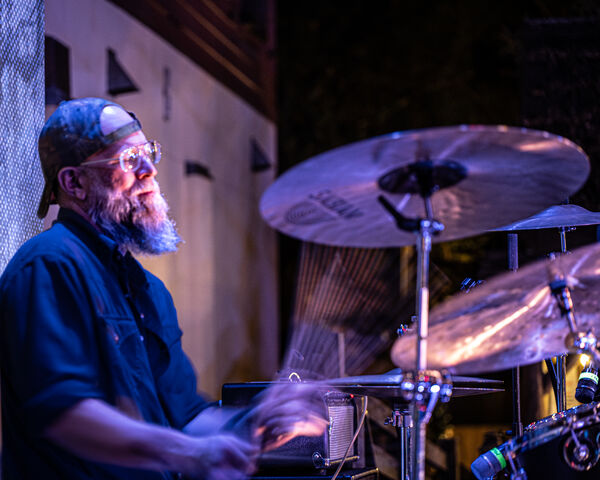
I love a slow shutter when I see opportunity to unite motion and stillness. Drummers are great for this—their torso might remain almost in place while their hands are a blur. In street shots, you can show the frantic pace of traffic while emphasizing the stillness of less transitional people or elements.
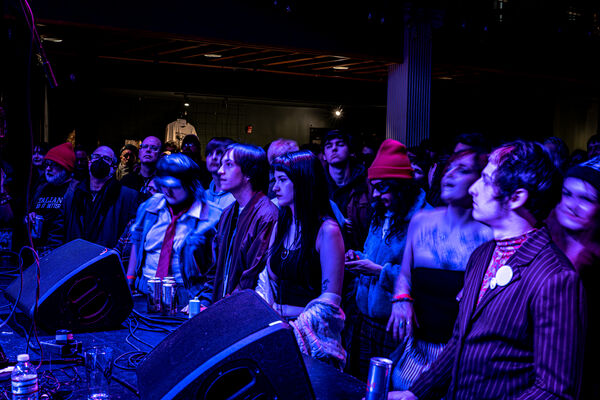
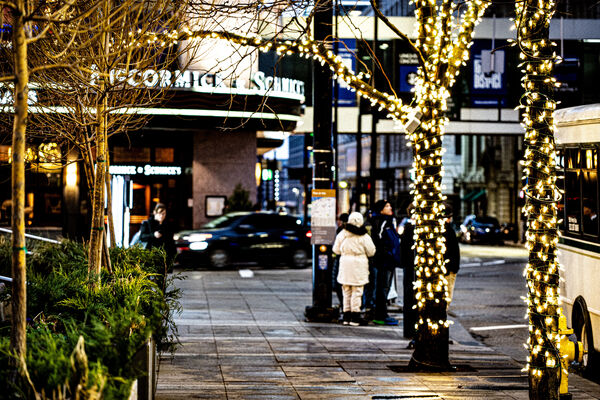
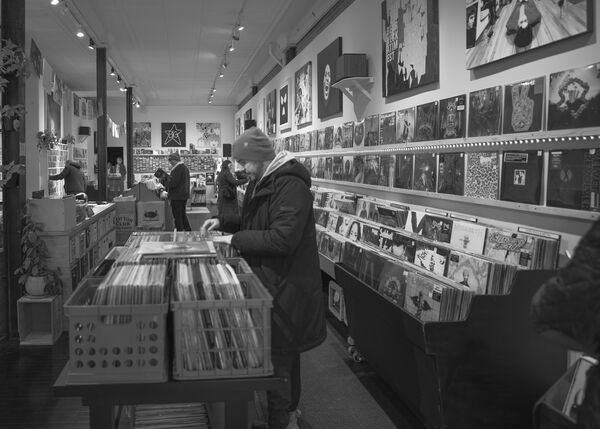
In "You Know Who's Dancing," I wanted to separate those in the crowd in motion solely by their blur. Using f/6.3 lent me enough depth of field that focus won't clue you in, and all four dancers are roughly the same "in focus" as each other. This was shot handheld, which is a testament to the practice of a steady hand combined with IBIS. The fact that each dancer is moving at a different intensity, one hardly at all, lends interest to the composition.
Usually requires a tripod or bracing. Image stabilization helps but has limits.
Long Exposure (1s and longer)
Accumulation. Light trails from cars. Star trails from the sky. Water turns to silk. The world that moves disappears; the world that holds still remains.
Long exposure is photography at its most unlike vision. You're recording what no eye can see because you're recording time itself.
I love this range and always challenge myself to find new ways to use it. If my intention is "people in a place at a time, once and never again," I view long exposure as a chance to show "people in places at times, each one never again."
I try to be thoughtful about the light on the subject and what angles I can use to capture the reflection and absorption of light for the most intentional outcome. Sometimes that's about multiple clearly defined steps in the motion of the subject. Sometimes it's about making the amorphous blur the subject, where the person or thing moving is less important than all the positions they held.
There's a lot you can do in post to emphasize and create interest in long exposures, but capture is when your intentionality has the most opportunity.
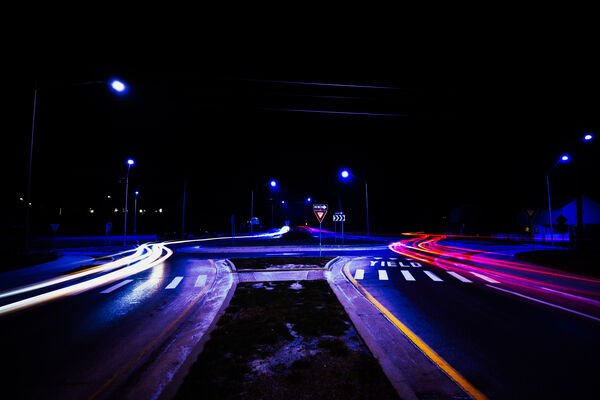
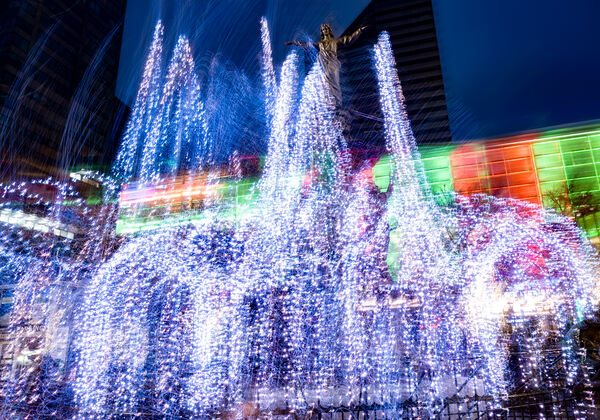
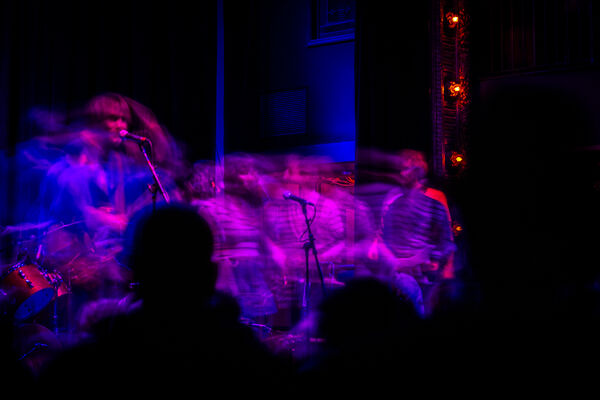
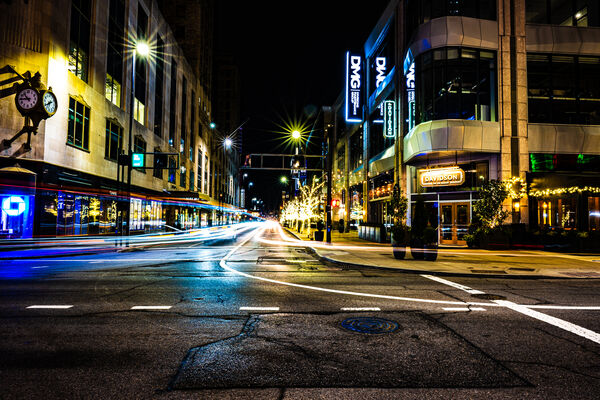
"Christmas Stars" showcases two intentions with long exposure: the traffic disintegrates into motion trails, making the street feel somehow lonely, and the lights turn into starburst blooms, which lends the image its title. A 30s shutter at f/22 means lots of light information all the way across the photograph, exemplified in the depth of the shadows on the clock and the character of the light reflecting off the street that help give it the nighttime aesthetic I wanted.
Tripod mandatory. Often requires ND filters in daylight. Opens creative possibilities closed to fast shutter speeds.